God’s Architect

20130902_112137

Latimer: I got to go to Barcelona last week.

My stupidity started when I neglected to pack sunscreen. Oh yes, I brought sunscreen to England and Scotland… but to Spain? No. Why? I don’t know! “Latimer you fool! You complete fool!”

It was so hot over there. I touched down, stepped off the plane and my insides began to melt! I didn’t actually burn like I thought I would – nope. I boiled, from the inside out!

IMG_20130904_114819

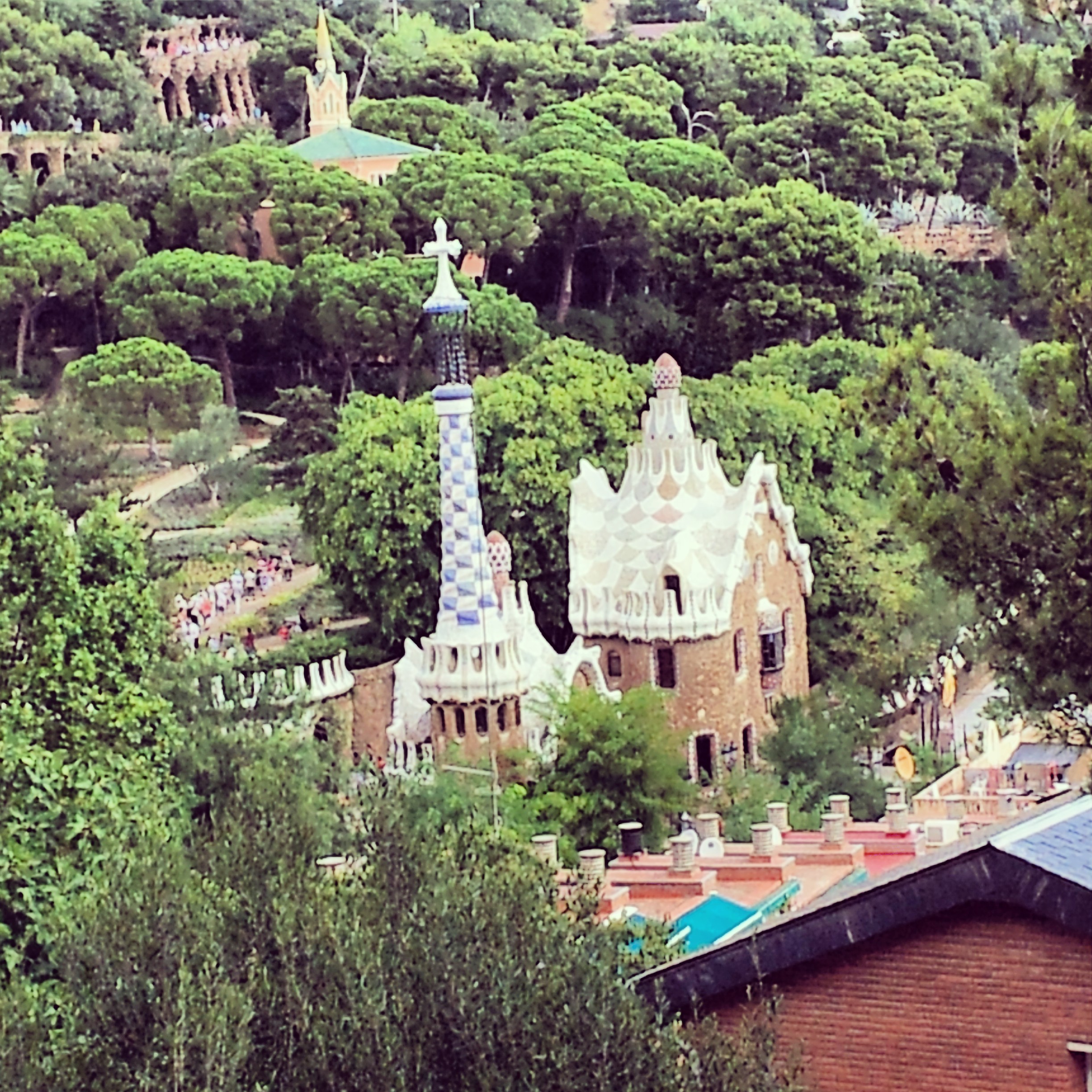
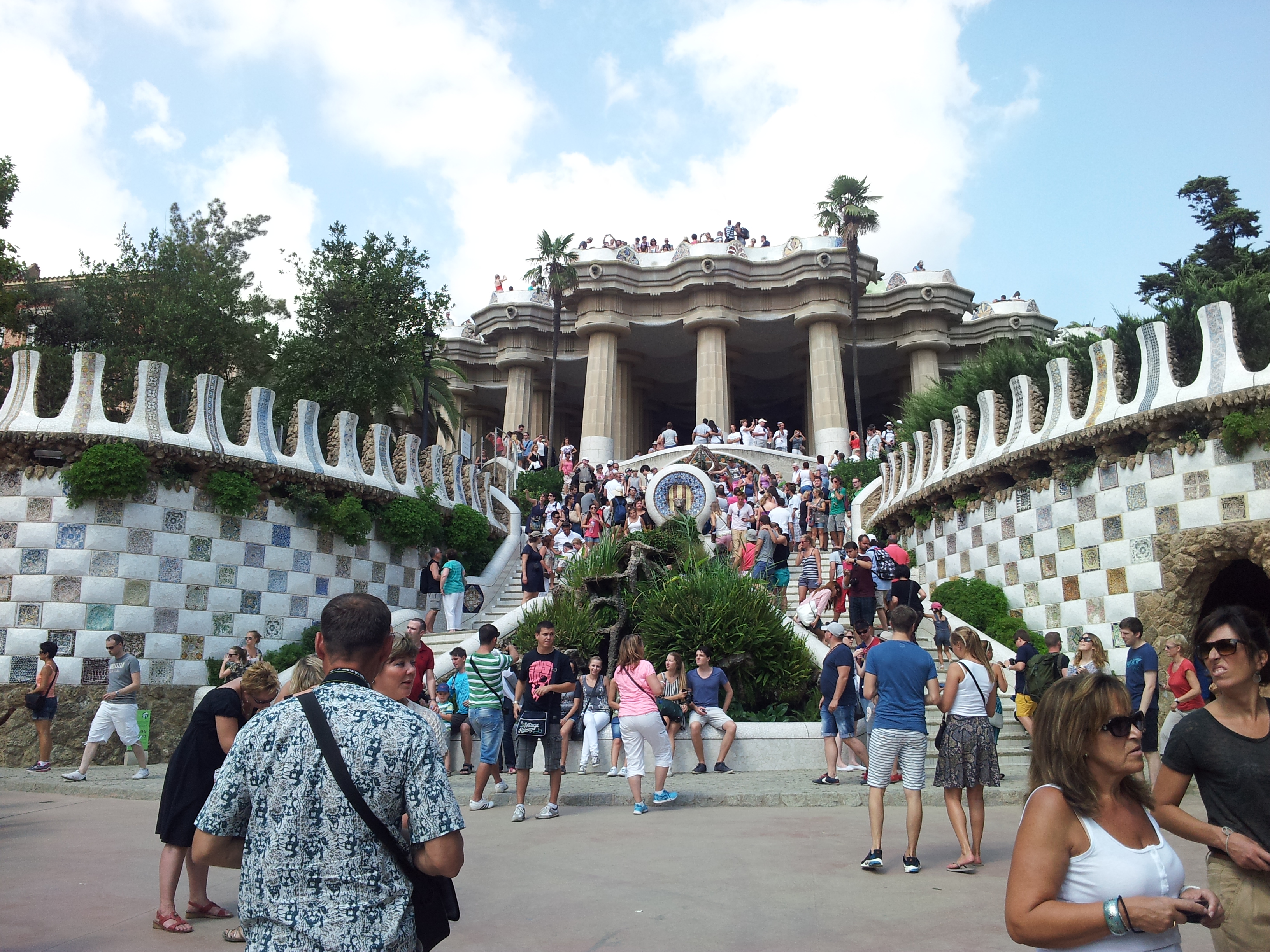
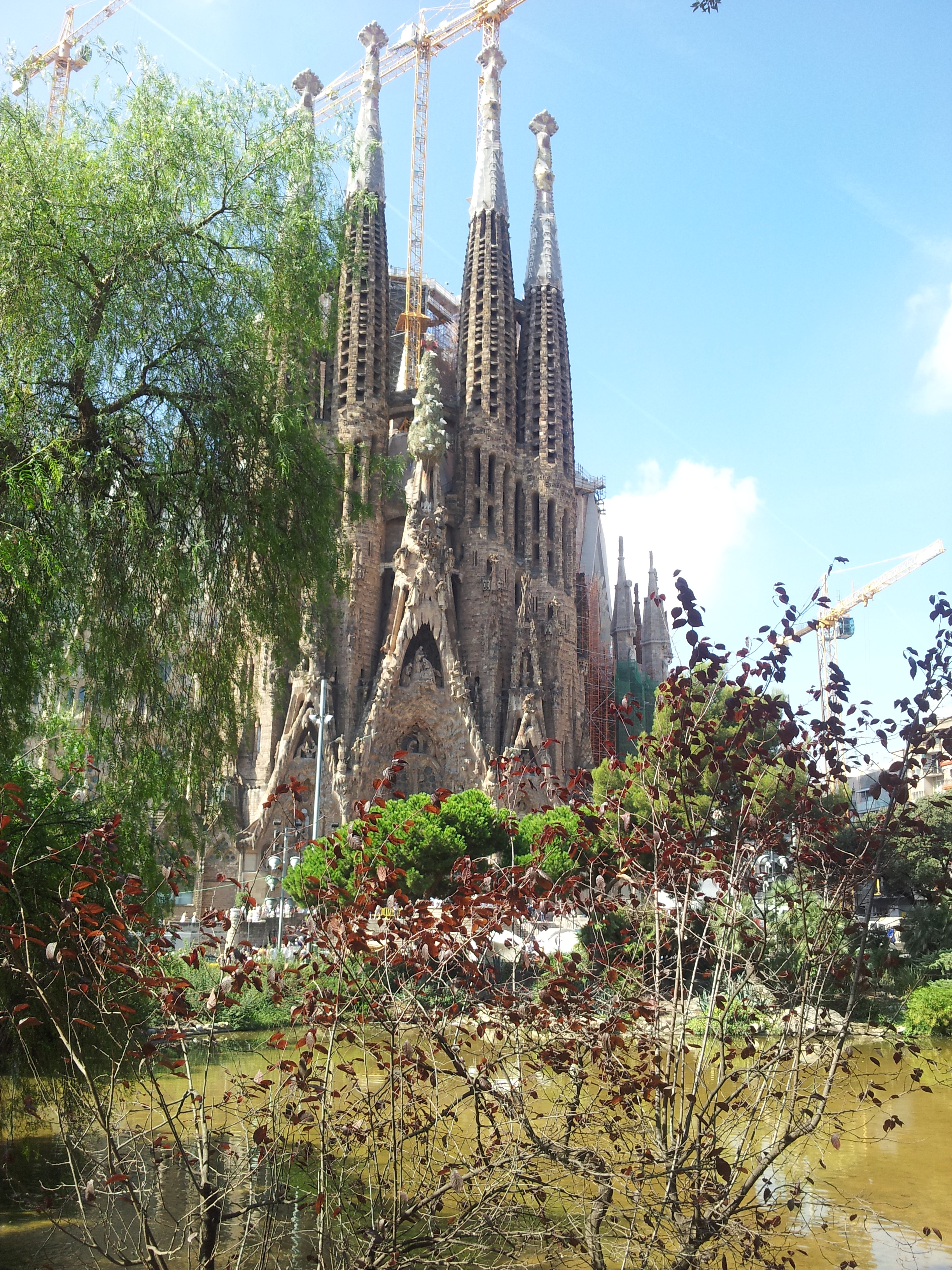
My second lot of stupidity was my continued disregard for one Antoni Gaudí. Yup; I was more or less content to let my exploration of the man’s work end at a fly-by visit to Sagrada Família and a hellish, blistering walk around Parc Güell .
20130906_113645
WOW!! @_@

I flew by Sagrada Família for two reasons; 1) I thought I didn’t like it (but actually I was in awe like everyone else when I saw it) and, 2) the queue to get inside stretched around the entire building, in the harsh glare of the sun.

I couldn’t do it. I couldn’t queue (not after a summer of queuing in London, and the heat of the Barcelona supernova sky @_@).

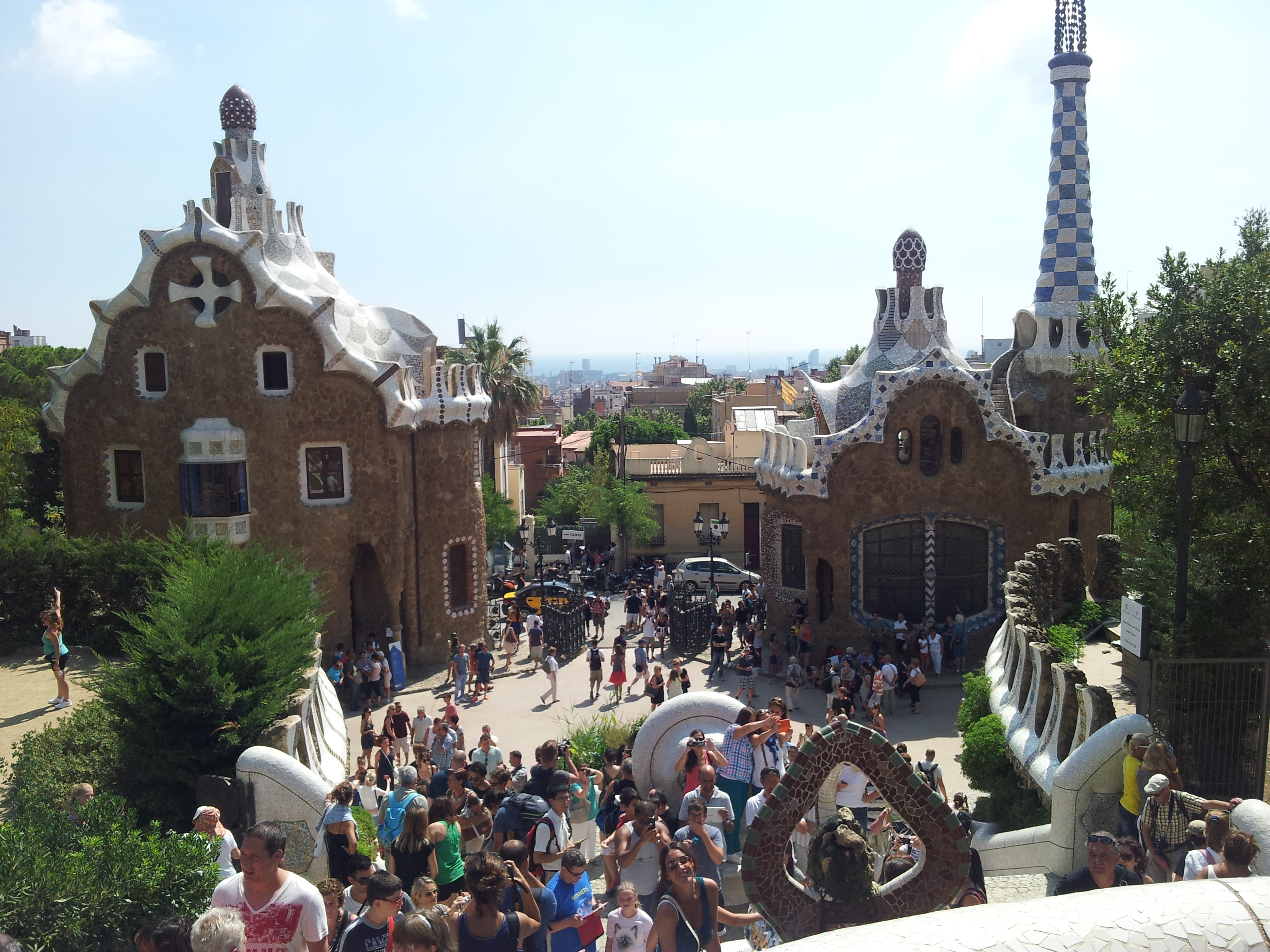
Parc Güell was a-trip-and-a-half.
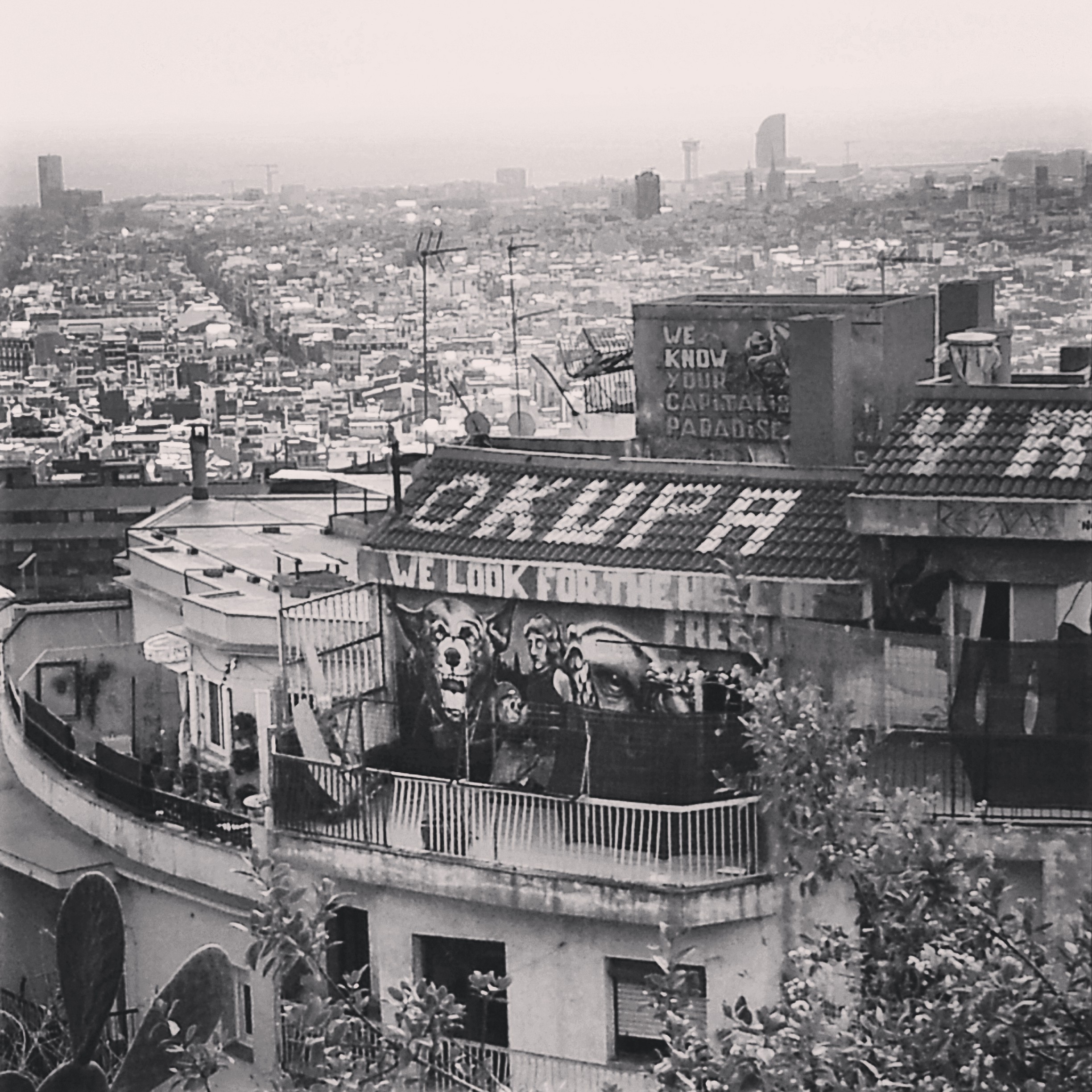
A view of Barcelona from the climb!

IMG_20130906_220741

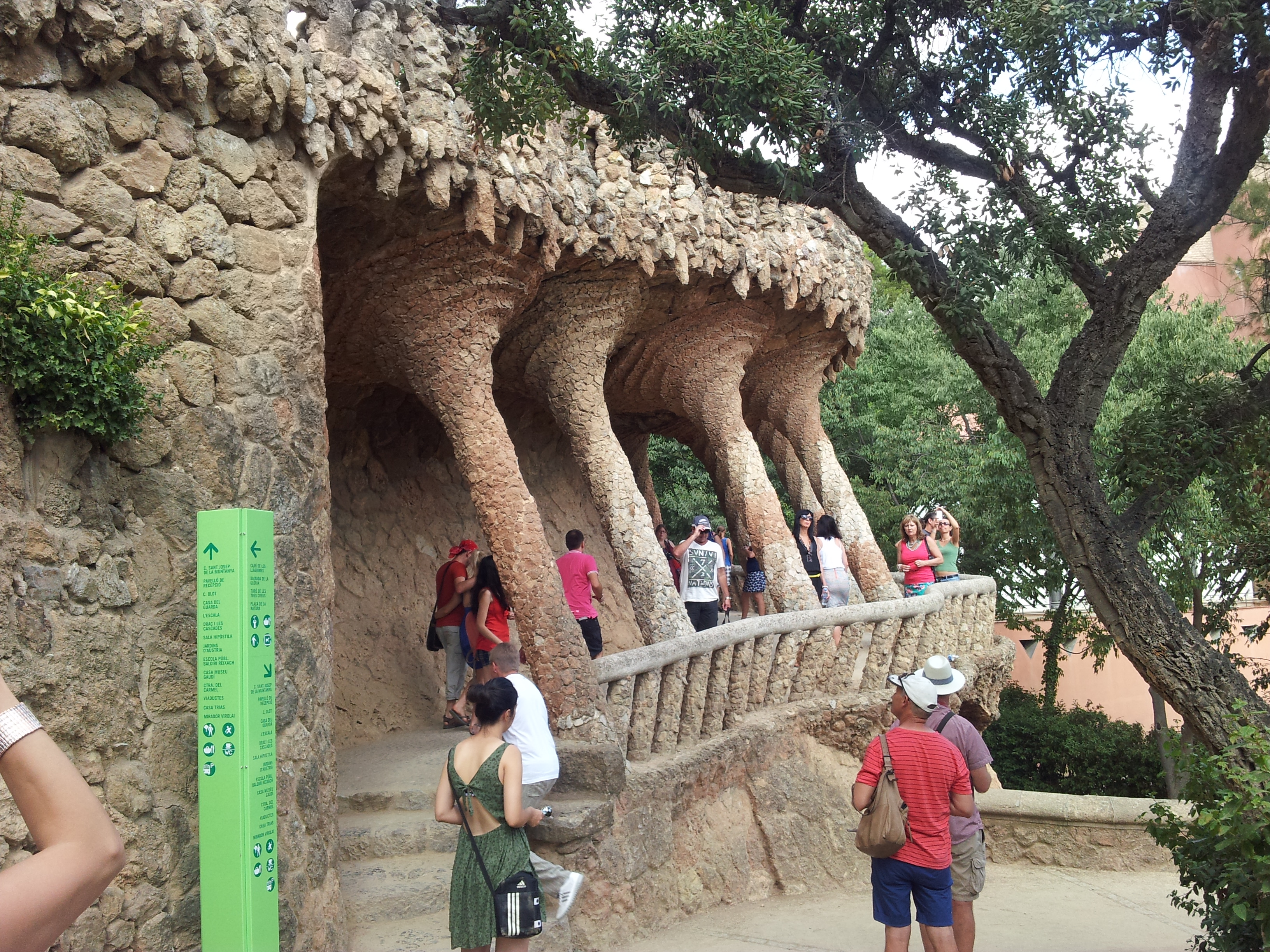
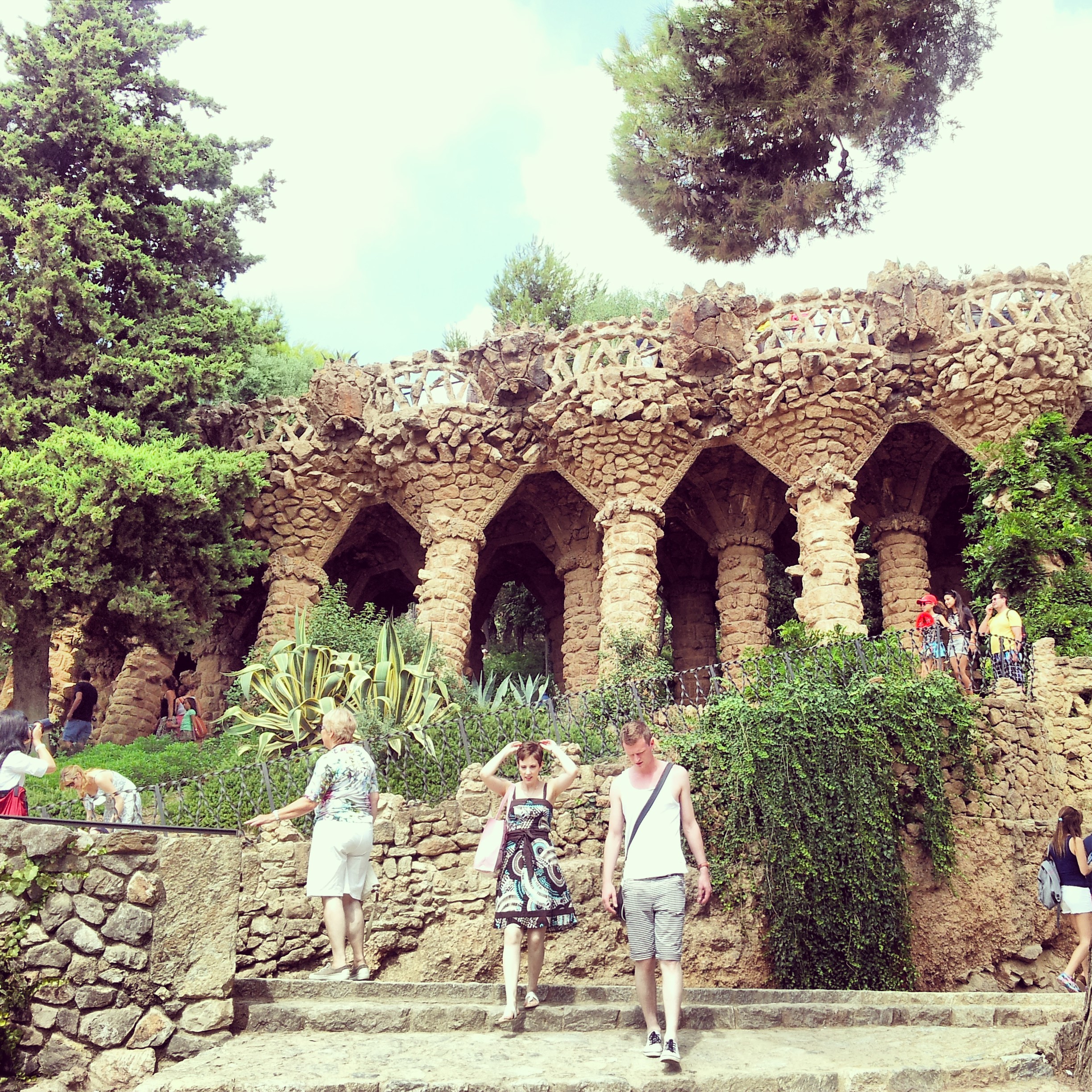
It was the height of the midday heat, a harsh, steep upward climb to the top of the park, and 30 minutes spent traipsing around looking for the damn Gaudí lizard fountain! I didn’t come into the park through the entrance, but rather the end; so I really faded fast walking around in the heat.

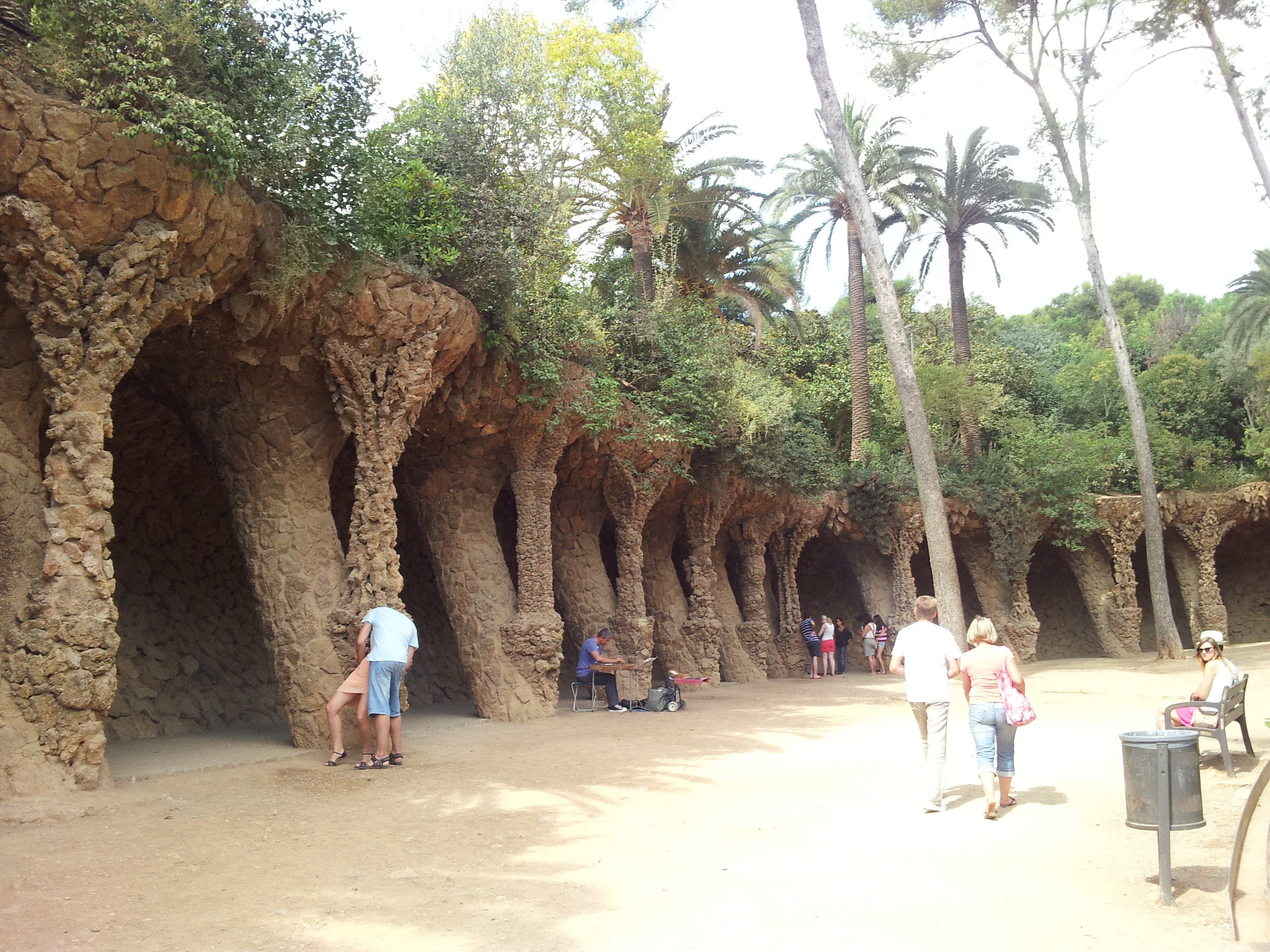
I don’t know what feeling Gaudí was looking to create, but to me, it was like I was in hell; walking through the dried out skeletal carcasses of vast beasts that had perished in the desert sands of Güell/Hell.
20130906_122747
Whoooh, are those two peeps snogging? I think so!! HA!

20130906_122530 20130906_122649

IMG_20130906_220205 IMG_20130906_215744

IMG_20130906_220506

I nearly gave up looking for the entrance, but I steeled myself and plodded on, thinking of Bear Grylls and how I must have learned something that could save me, should the moment arise (which on a few occasions I thought, yup, it’s time to go Grylls!).

All I could think was; “Drink my own wee? Güell no…”

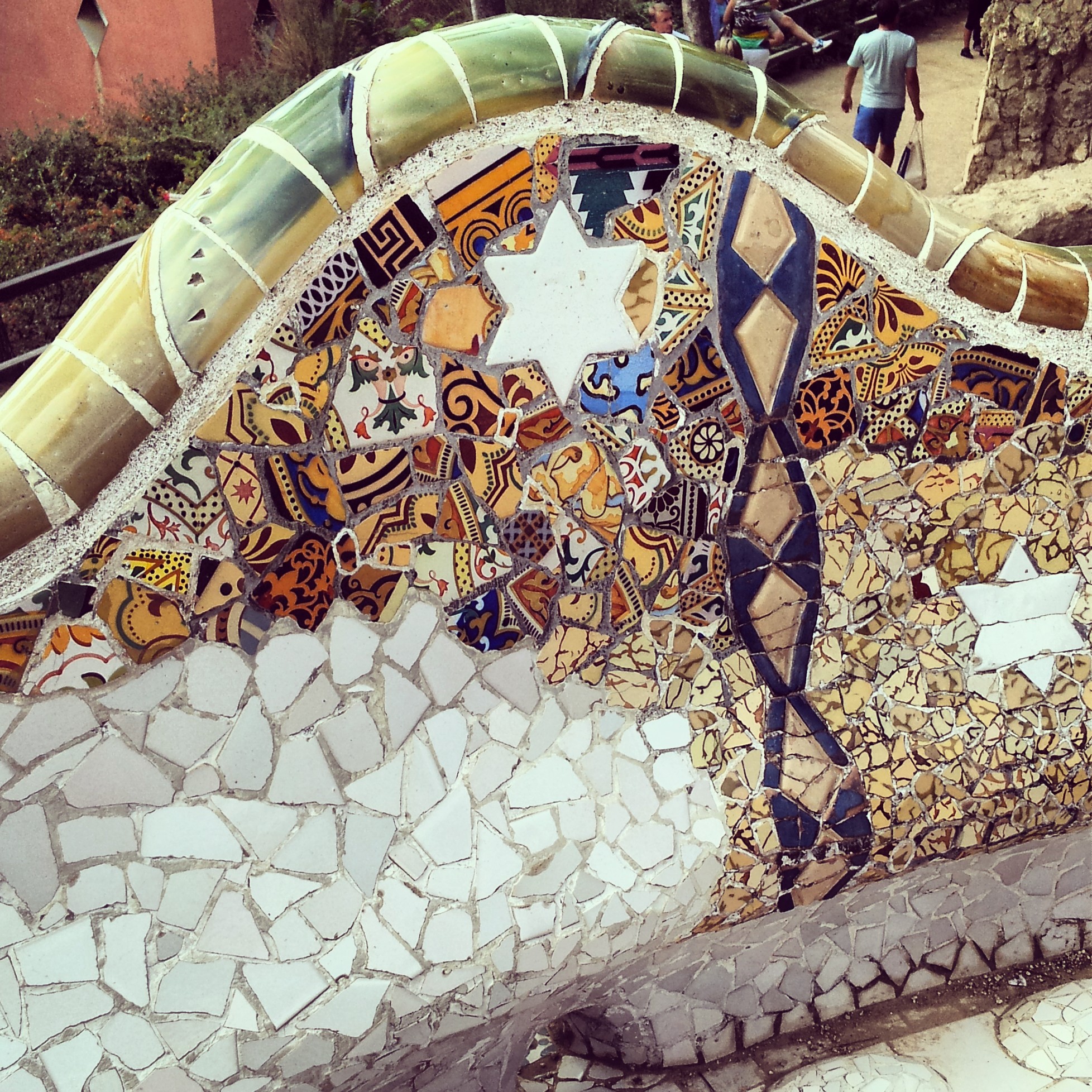
I found it in the end, and the lizard was being held hostage by the mob. I couldn’t get to see him much.
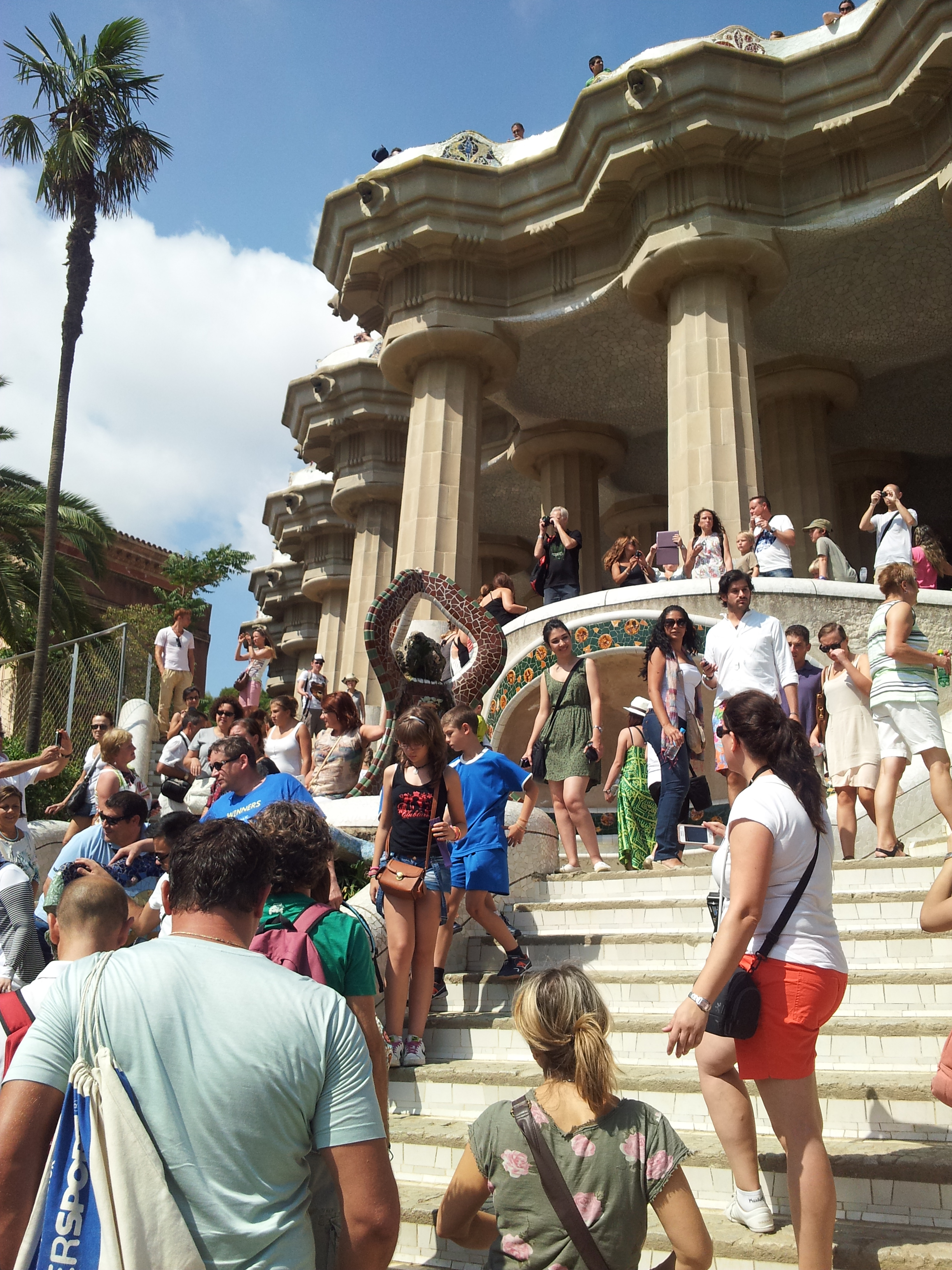
20130906_130848
Back away from the lizard… pluz-leezz? No? Damnit…

20130906_130953 20130906_131147

I was feeling nauseous at this point, so I fled almost straightaway for a lie down in the hotel.

After that I thought, no more Gaudí.

BUT! An accidental walk over to Palau Güell changed that.

IMG_20130909_113755

It was the mansion of the Güell family, the patrons of Gaudí, who commissioned Parc Güell . This family was super-rich, by today’s standards they’d be on the Forbes list and worth 70 billion euro. Their mansion was, actually very small, but the Gaudí -ness of it was astounding. I came to appreciate that he was in fact a genius architect and his mind was a wave of pure inspiration.

No one built like Gaudí before or afterward. The buildings are wacky and over the top; but its more how he built, his attention to ventilation or the way natural light could be brought into buildings. He put so much thought into the building itself, how it should and would function.

Palau Güell doesn’t have doors as such. It has two massive ornate wrought-iron gates, with curling metal.

IMG_20130907_225146

When you stand in the entrance hall you can see right out onto the street, but the metal is deceptively thinner and thicker in parts that means the people on the outside can’t see in. That’s all Gaudí.
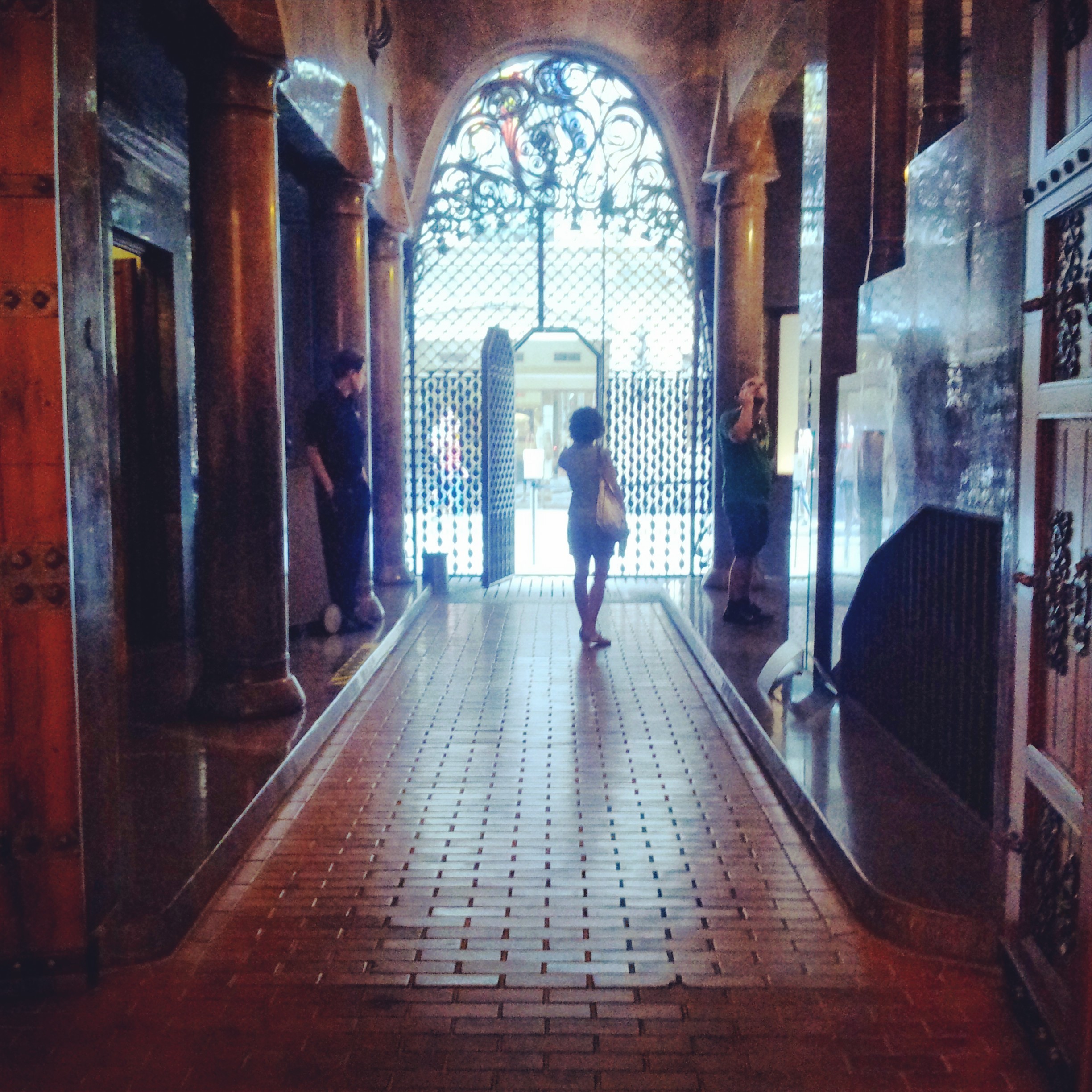
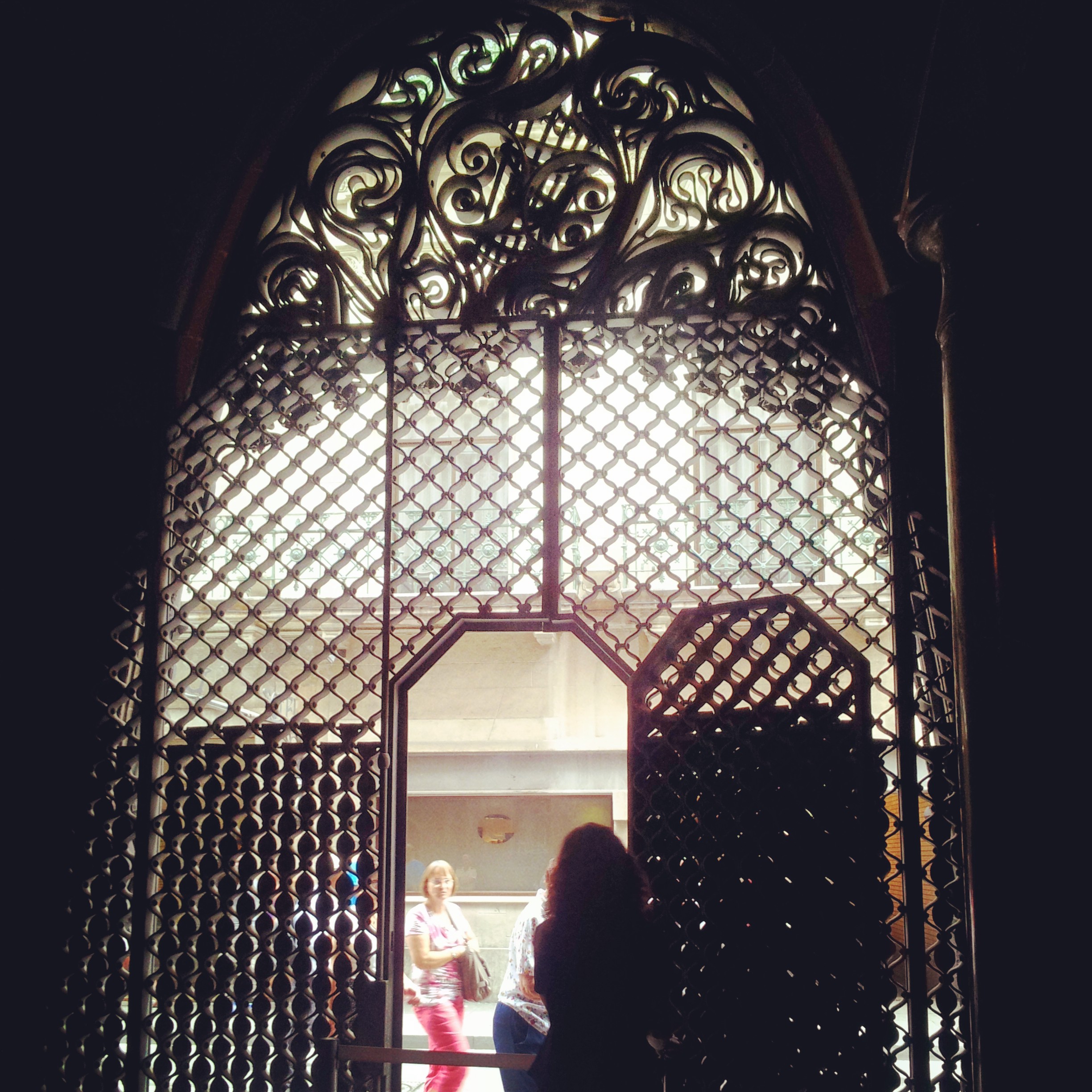
IMG_20130909_120447 IMG_20130909_120853

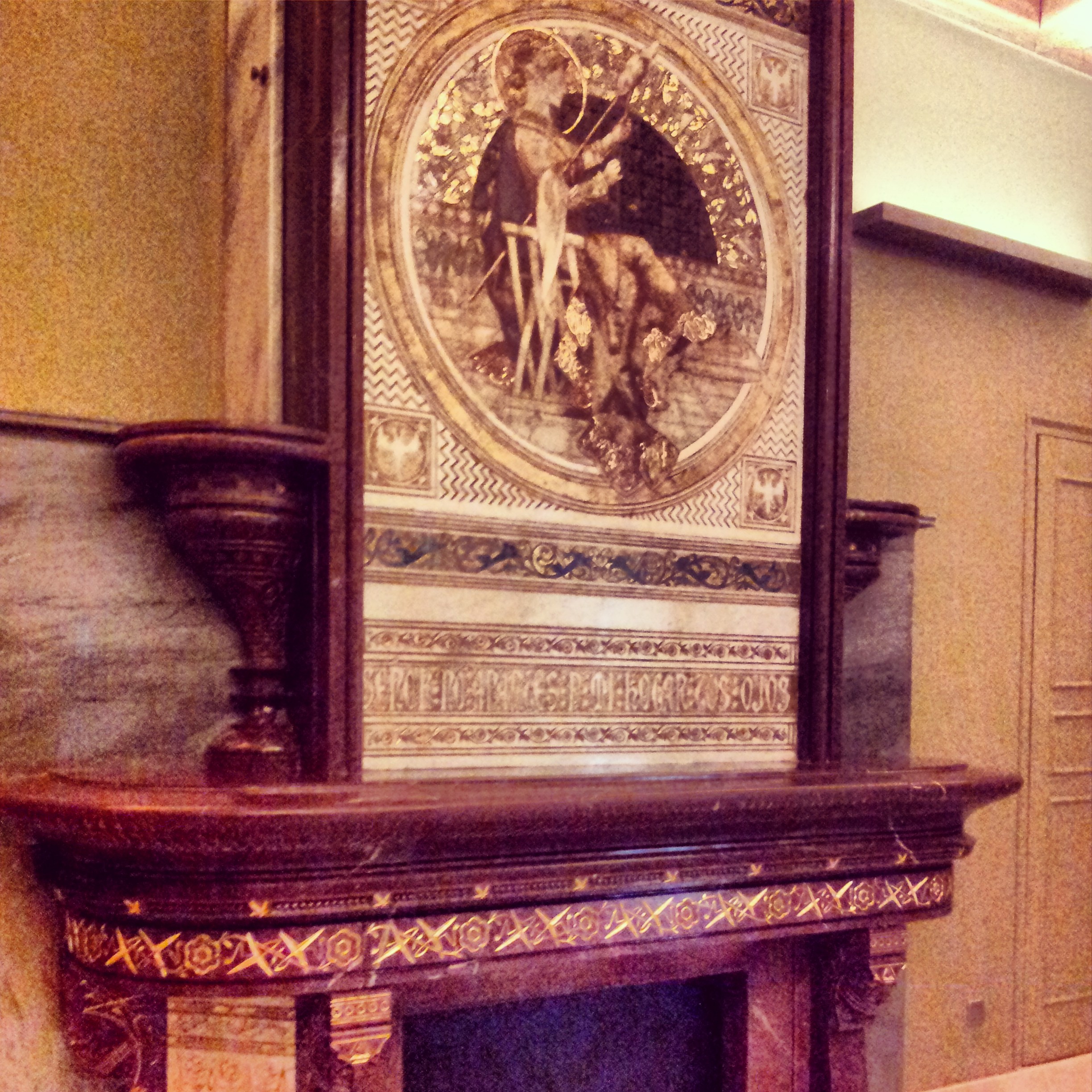
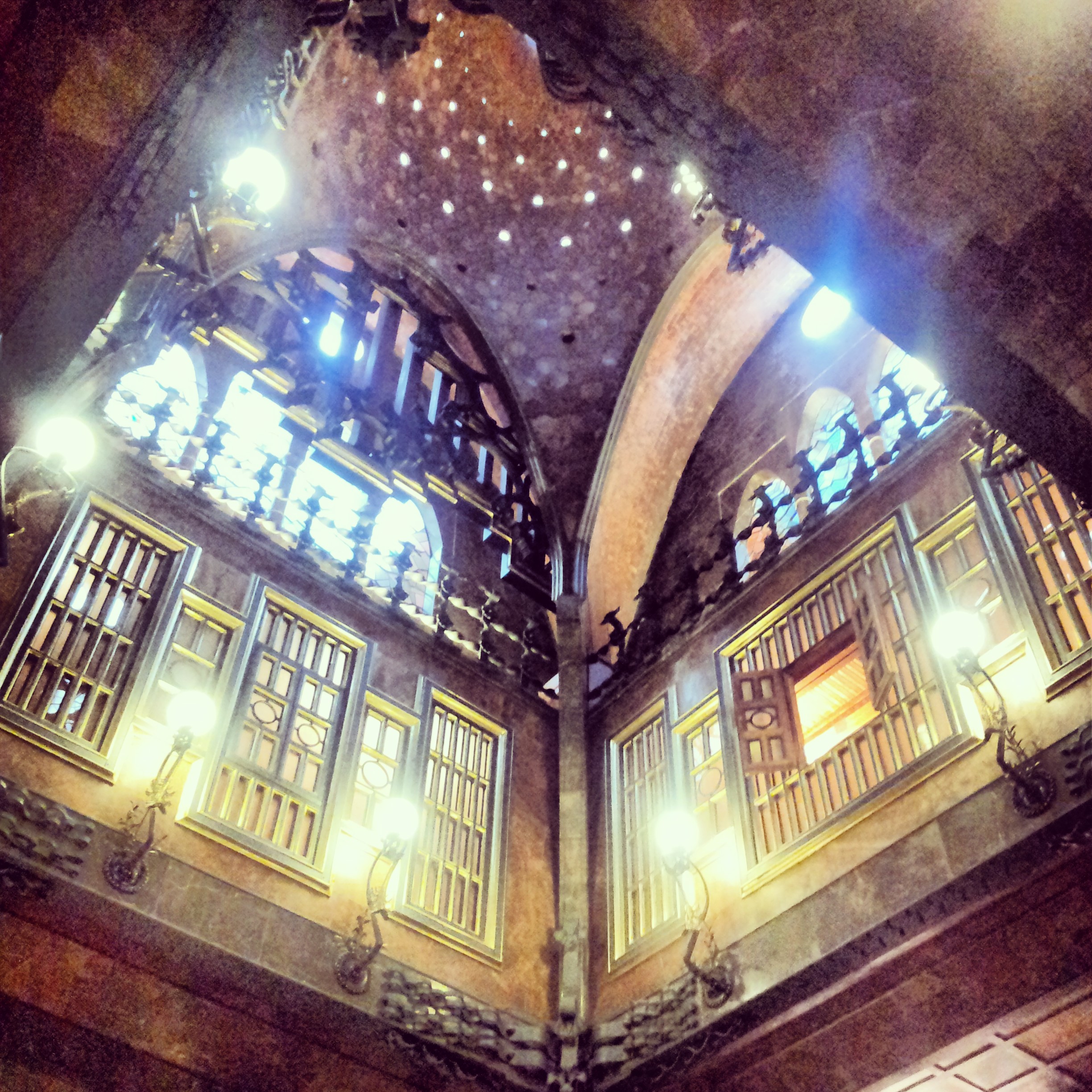
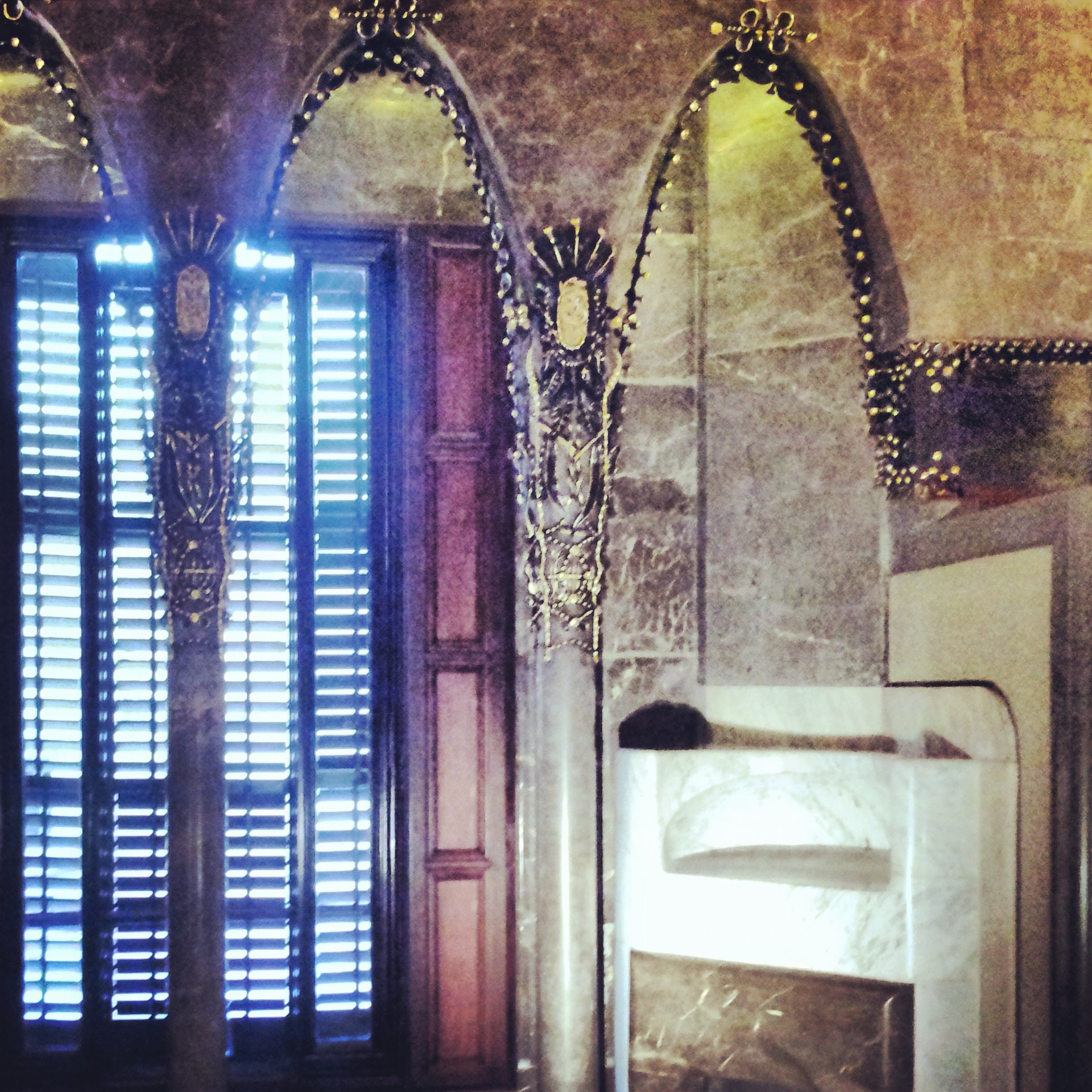
The halls curve and arch like waves; it’s like stepping onto a movie set, something from the imagination of a fantasy, or sci-fi writer.
IMG_20130909_115426 IMG_20130909_114623 IMG_20130909_115051

IMG_20130909_114338
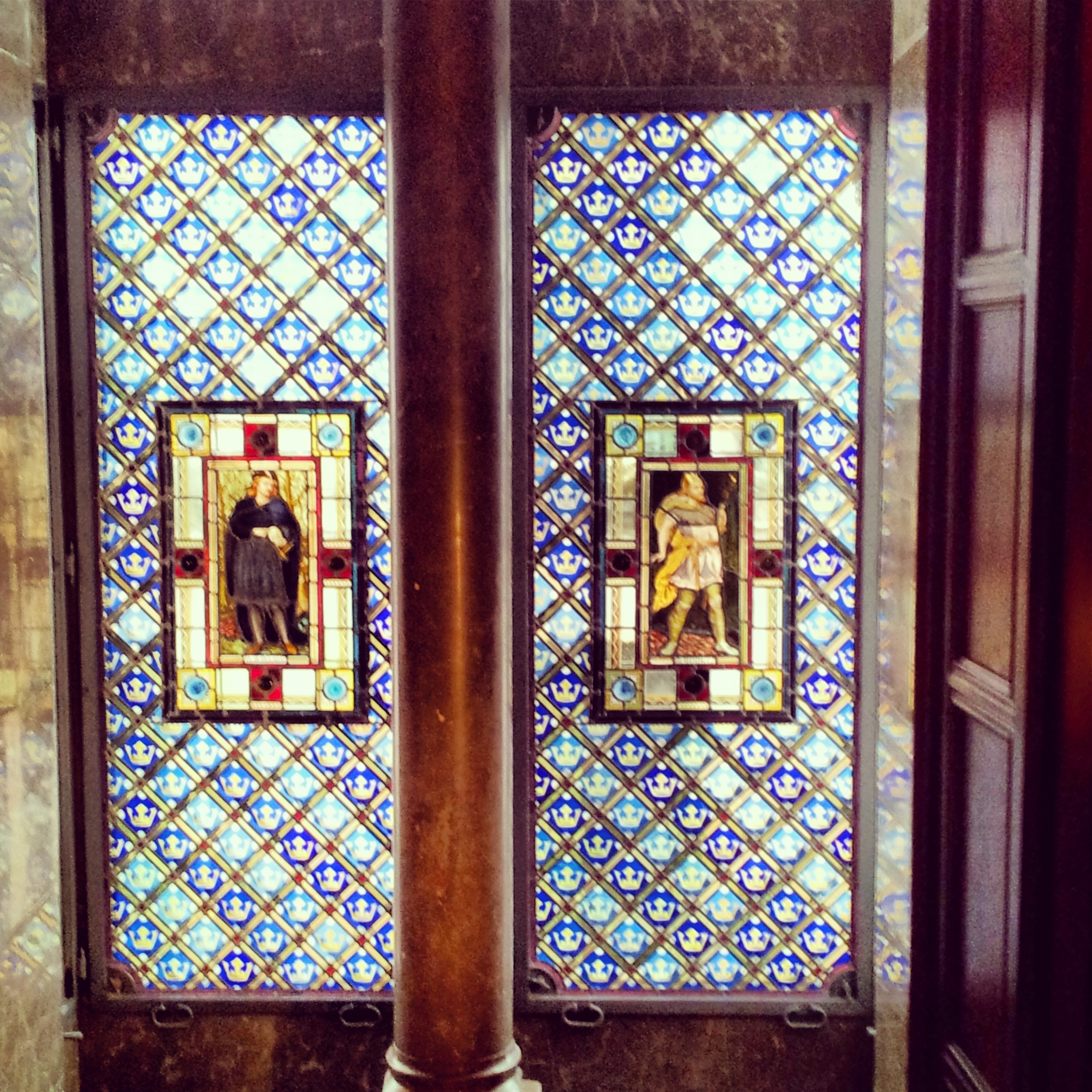
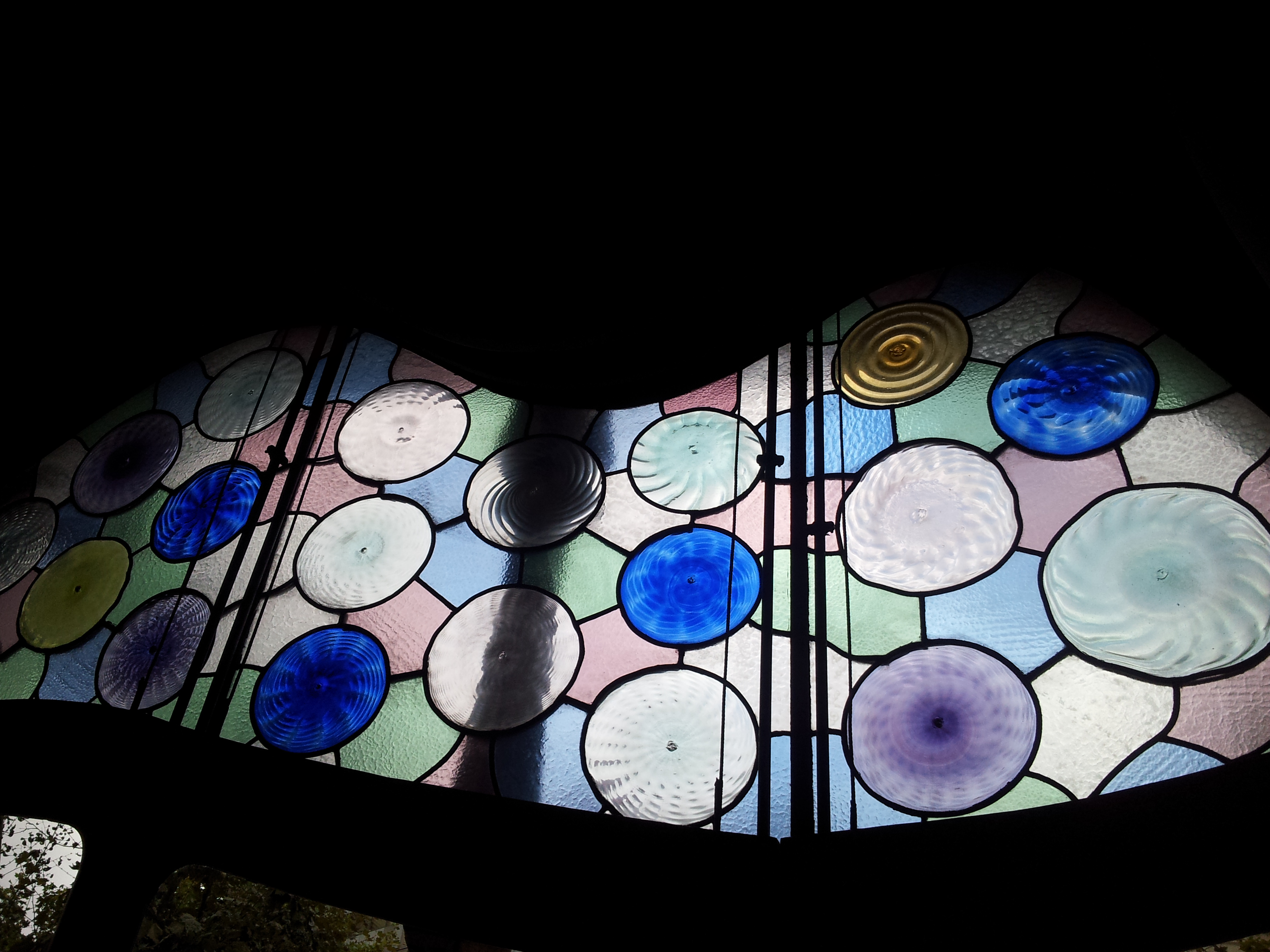
Shakespeare-inspired stained glass! The Bard is everywhere!!
IMG_20130907_225037
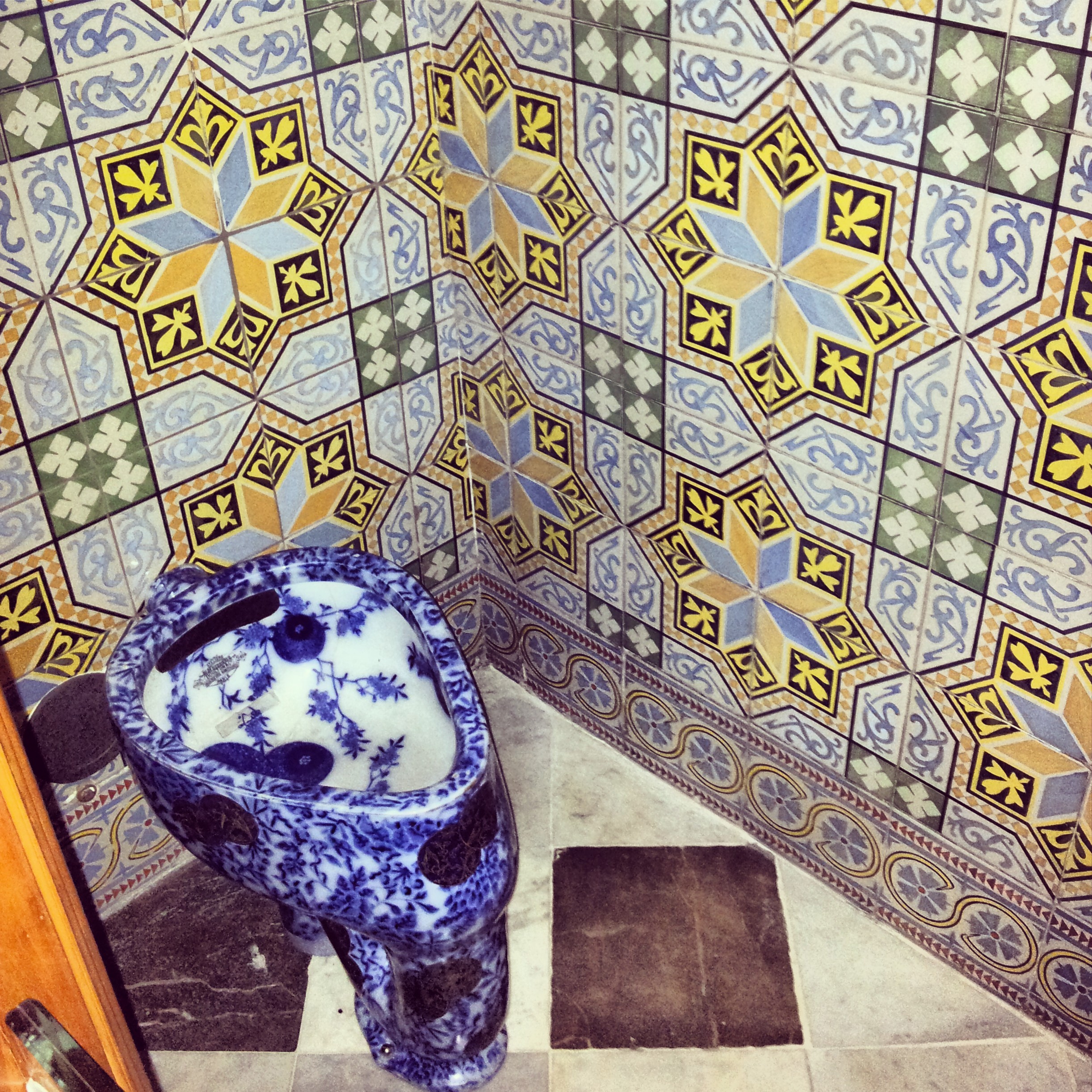
That is a Gaudi designed toilet!

IMG_20130909_114838

When Gaudí was awarded his degree one of his teachers remarked that; “We have given this degree to a madman or a genius, only time will tell.”

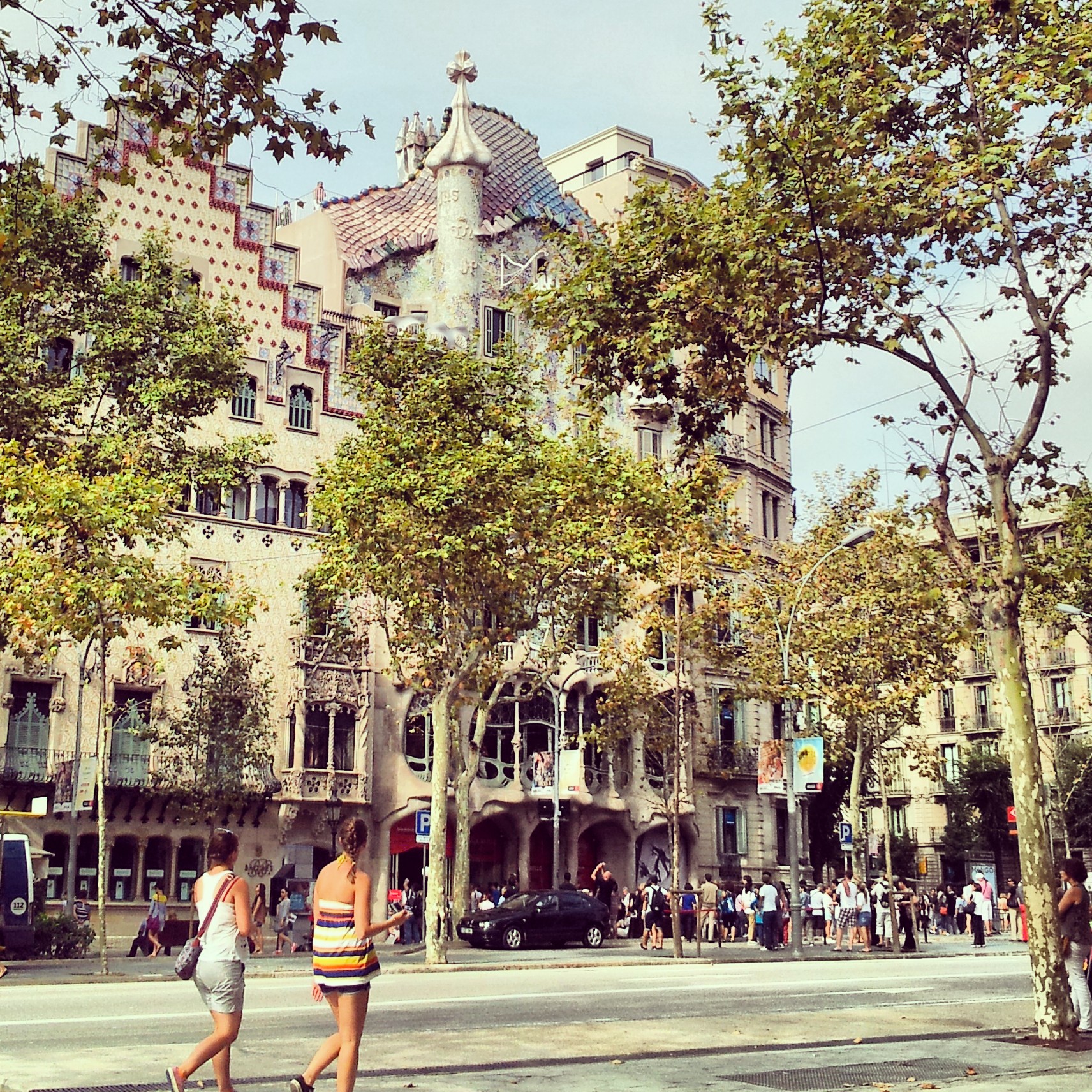
The most famous of the Gaudí buildings is probably Casa Batlló.
IMG_20130908_180427

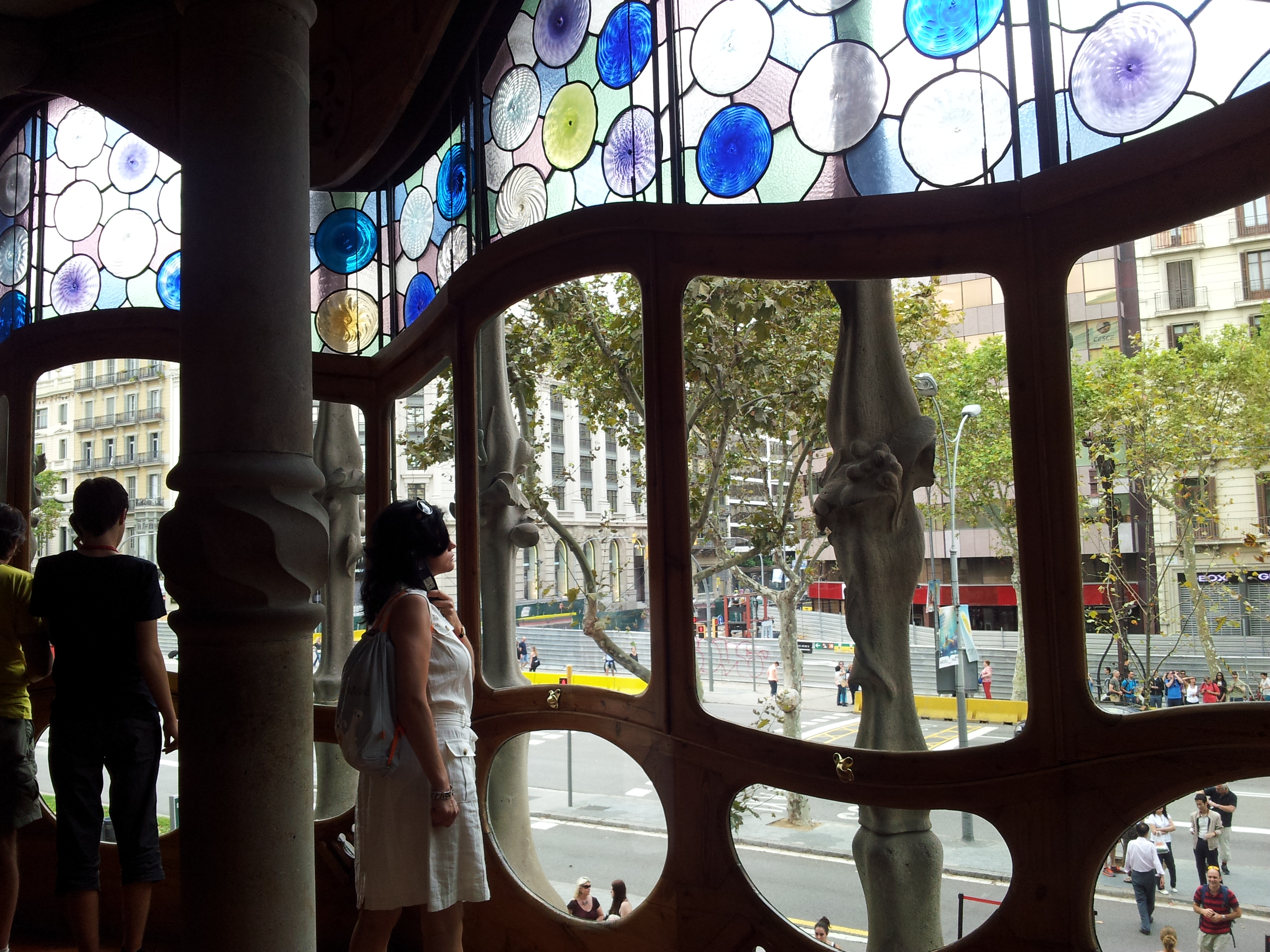
The interior is inspired by the sea, the ceilings are like ripples of water and there are whorls and eddies all over the house.  

20130908_113043 20130908_112913 20130908_112902

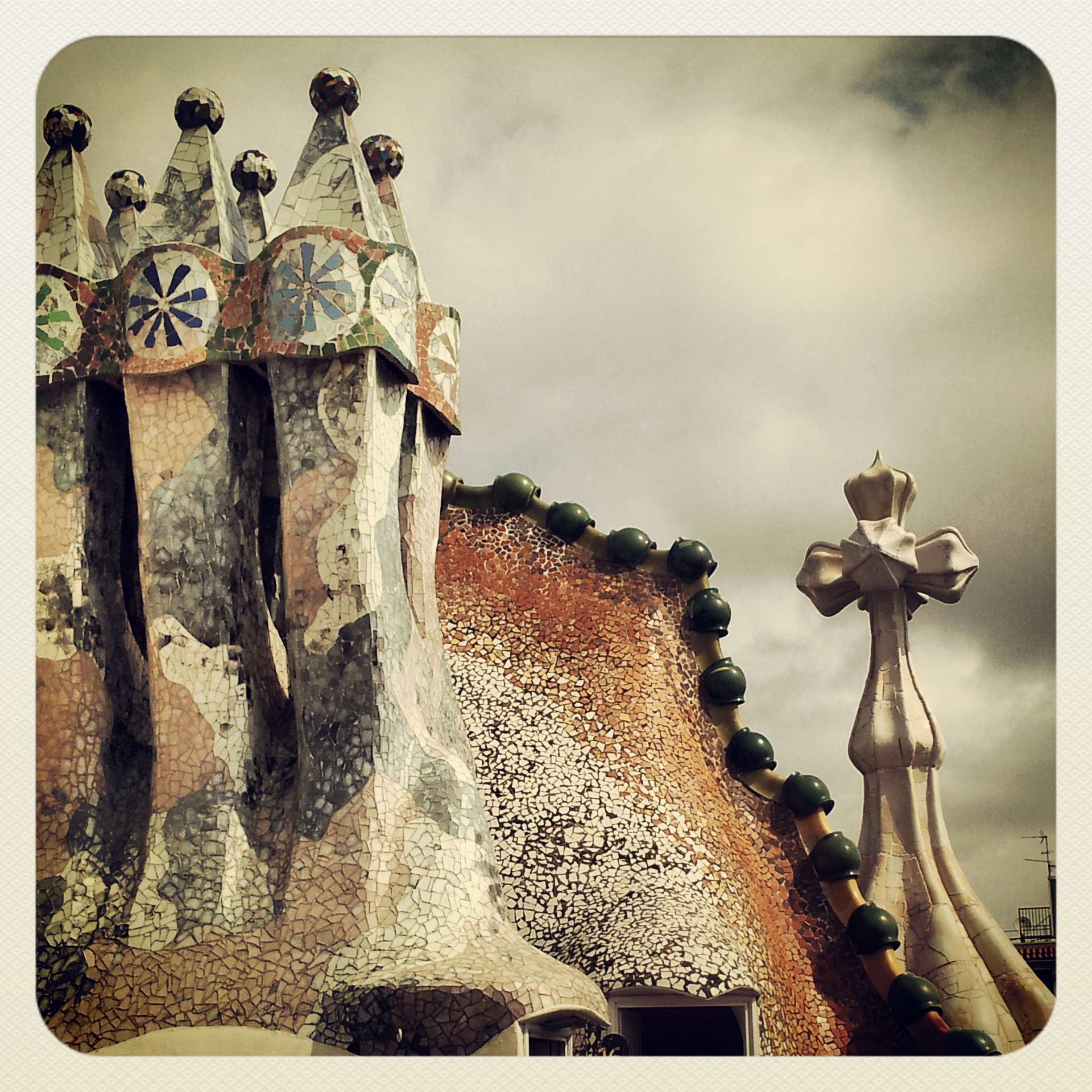
People have lots of thoughts of what the façade looks like. Some say it looks like bones (the spine of a fish); so they call it the House of Bones. They also say that Gaudí was inspired by Monet’s lilies painting and that the façade looks like that; or the balconies look like the masks worn in the parades that used to walk down the street outside the house. And the roof is supposed to look like a dragon resting.
IMG_20130909_111929 IMG_20130909_112853

Many people in Gaudí’s life died in the first decade of the 1900s – including his close collaborator and his patron Eusebi Güell. He took refuge in his work on Sagrada Família. By this point Gaudí didn’t have much money and confessed:

My good friends are dead; I have no family and no clients, no fortune nor anything. Now I can dedicate myself entirely to the Church.”

He had to take alms to continue his work on the church.

20130906_111914

One day, aged 73, Gaudí walked away from Sagrada Família and was knocked over by a tram. He was dressed in tatty clothes so people thought he was a beggar. He did not receive immediate aid and by the time he got to hospital, and was recognised, his condition was critical.

He died of his injuries and was buried in his Sagrada Família.

His story ended on a sad note. But we can look at it like this; his work survives to inspire people in big ways and little ways, and even though he passed away in poverty, the inspirational wealth he left behind will always be far greater than the money he might have had 🙂

——————————————-

Ridley also went to Barcelona a year ago! Check out her thoughts here!

Also, just a quick note: if you want to see any more of our photos we’re up and running on instagram, pretty regularly now 🙂

If you are on it too, drop us a line! Or if you haven’t joined yet, do!, it’s a great fun way to share your photos!

Where Giant’s Roam

Latimer: Last weekend, I journeyed north – to the rugged and jagged cliffs of the county Antrim coast (Game of Throne’s country! :)).

Winter is Coming… Right?!
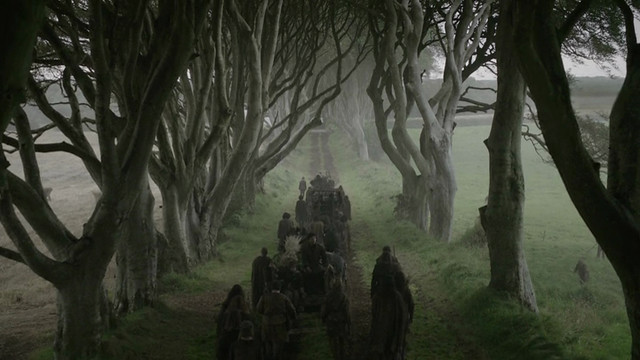
The Dark Hedges Antrim

I’m just after realising… I thought ALOT of the places I saw as we drove around the coast looked like the Iron Islands from Game of Thrones… and we ended up, having missed a turn, at a tiny, tiny harbour – and!- AND I just looked it up (it’s called Ballintoy) and it was a location for the Iron Islands on Game of Thrones!

Ballintoy Harbour
Iron Islands, Pyke… but actually Ballintoy… I’m in awe
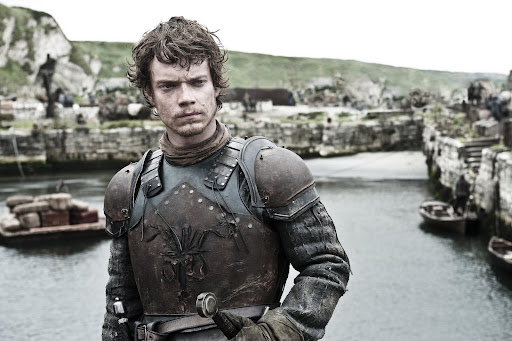
Yo, Theon Greyjoy spin around, Latimer is waving at ya!

It was the back of beyonds. Wow, I’m actually just going ‘damn, I should have gotten out and ran around or something!’ (over his shoulder on the left-hand side facing us! up there near the cove… yep :)!). I even took note of the place, thinking, I must remember this place!

Anyway, going to Antrim was a first for me. It’s not that far from home, nowhere in Ireland is in fairness, but sometimes it takes a few years before we end up going to the places that we’ve always meant to go.

I’ve always meant to go to the Giant’s causeway; it’s one of those ‘on the list, but never seem to go’ sort of places (like Sceilig Mhichíl, the tiny rock monastery out in the Atlantic ocean; but that’s another story!).

Sceilig Mhichíl… another ‘on the list’ place

As we journeyed to the tip of Northern Ireland, I started thinking back on the story of the causeway, or what I remembered of it. In school I remember that we learned lots of the old Irish stories; children of Lir, Deirdre of the sorrows, Fionn and the Fianna (band of warriors) – I even remember learning about all the tests a young warrior had to do before he could join the Fianna; we had to draw a picture for each task and I think there were 12? I remember one of them was run through the forest while picking a torn out of your foot (and another task was to run through the forest without breaking a single twig!).

We learned a lot of Irish stories; we even did plays ‘as Gaeilge’ (in Irish). Children of Lir was a popular one (I played Fiachra? I think! In the act where the children are turned into swans… I play a child being turned into a swan very well, as it turns out! HA!).

The story of the causeway was a little fuzzy for me. The giant’s name was all I really remembered: Fionn Mac Cumhaill.

When we got to the causeway visitors centre, the story started to come back to me as I watched the CGI Fionn (known as ‘Finn Mac Cool’ in Northern Ireland, but ‘Fionn Mac Cumhaill’ in Irish) on the explanatory video they played.

This story, and the one that I remembered, was where Fionn was mocked by a Scottish giant who he could see beyond the sea in Scotland (jumping up and down and making gestures – the Scottish giant wanted a fight).

Fionn was enraged and threw stones into the sea to build a bridge to get to Scotland (one of the sods of earth became the Isle of Man – that’s a side-story!). He built the causeway, and traveled all the way to Scotland to confront this would-be foe.

20130309_113806

20130309_113527

Fionn crept along the final steps of the causeway. He started to haul himself up the Scottish cliffs then paused. The Scottish giant, Cuhullin, was far bigger than Fionn. So, like any sensible person (and giant!), Fionn fecked off back home and shut the door. As his wife stared at him, with a ‘what have you gone and done?’ look on her face, the ground beneath them started to tremble! BOOM, BOOM, BOOM! Cuhullin was racing across the causeway to fight Fionn!

causeway

Fionn’s wife, proving the clever one, told Fionn to get into their baby’s cot. She dressed him up as their baby and pulled the curtains to hide him from view.

Cuhullin banged on the door and she let him in. Fionn’s wife told Cuhullin that her husband was out. The giant pulled back the curtains and saw Fionn ‘the baby’ in his cot. What a massive baby, he thought, shaking in his boots – how big would his father be?! Fearing for his safety, Cuhullin raced back to Scotland.

giantscauseway

I remembered the name Fionn Mac Cumhaill as also being ‘Fionn and the Fianna’, the story of an Irish warrior and the fearsome Fianna warriors. As it turns out this Fionn and the giant share the name, but the two have very different stories.

If you have ever heard the story of Tir na nÓg (the land of the young) and the young Oisín who journeyed there on a white horse with a girl called Niamh; well, Fionn Mac Cumhaill (of Fionn and the Fianna fame) was Oisín’s father.

The causeway was beautiful, despite the typical Irish bad weather (winds that would whistle right through your bones and icy cold rain!). The rocks were a little dangerous, because of the wet and the wind, but never one to care I scrambled across them and out as far as I could go – by law! The rocks of the causeway are made of basalt, which is solidified lava. It was caused, in reality, by a volcanic eruption.

Apparently at one point in its life (around 1901), it was rumoured that the causeway was going to be moved to a Philadelphia park (stone by stone and rebuilt there). Thankfully it wasn’t, but lots of the stones were taken away and can be found all over the world.

20130309_104454 (1)

This box shows some of the places where you can find some of the Giants causeway! It’s very unlucky to remove stones and you are definitely not allowed anymore (my Mam kept saying; ‘wouldn’t you love some of those stones for your garden?’).

Back at the visitors centre we saw a collection of postcards from years ago, from people who visited the causeway (some would have been from the early 1900s). Very interesting to read voices from the past 🙂

20130309_105521


20130309_105446 (1)

20130309_105511

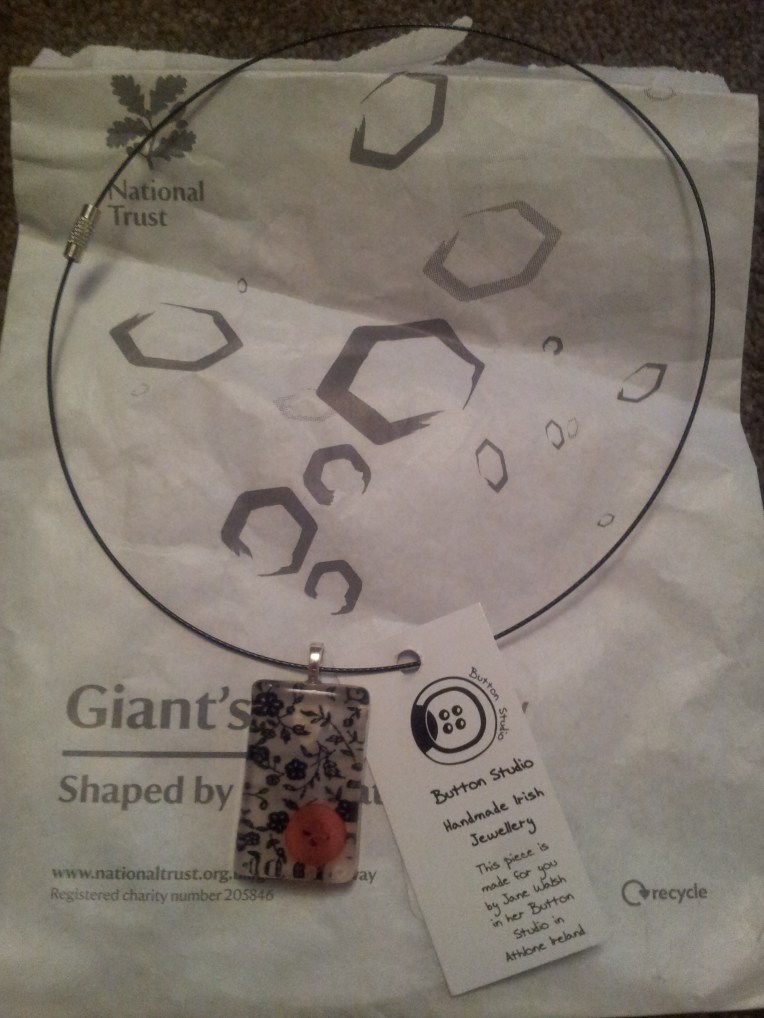
We also saw some lovely jewellery made from buttons by a woman called Jane Walsh (Button Studio) in Athlone Ireland. I couldn’t leave without one!

20130309_102755
The things you can do with buttons!
20130309_102800
Button rings!
20130309_194756
My button necklace

Also lots of Irish fudge and chocolate, yummers!

20130310_112539
Chocolate and fudge! Yummy! (That bench read; ‘can you fit in a giant teaspoon?’ and had a teaspoon drawn on it 🙂 )

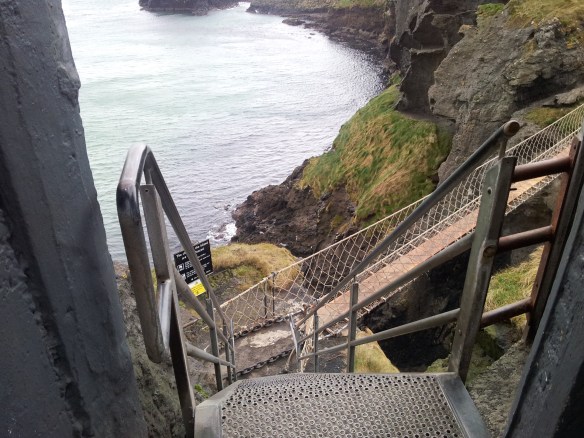
We had another site to see while on the Antrim coast, the Carrack-a-Rede rope bridge. It’s a short rope bridge that leads over to an island where fishermen used to cast salmon nets (back in the old days they would cross the, then, one-rope bridge to collect their catch and haul it back over the nauseating cliff gap).

Not my picture, but this is clearer I think

20130309_150626

20130310_115753
A view from a parallel cliff of the bridge. That island/rock is what you are crossing the bridge to get to.

I really, really wanted to cross the bridge (even though I was afraid). But the winds were far too dangerous and the bridge was closed for the day. The sharp, icy winds would have swept you right off the bridge, so no good, we weren’t getting across. It was annoying, but being that close to the cliff, I felt pretty scared anyway. I kept saying I would have done it anyway, and I would have, but it looked really scary.

20130309_150250
Uh-oh… the long way down! Eek
20130309_150024
Be brave Latimer… you will return to cross one day!!

There were steel steps leading downward to the bridge itself at a very steep angle. If I have a fear of something, it is the sea. I really don’t like it. But heights aren’t great either, and it was high up over the waves crashing violently against the cliffs, so… I’ll put it back on the list for a later date!

We saw a lot of stunning views of the rugged coastline and also stopped by a small ‘village’ (I’m not sure it was a village exactly, maybe a small collection of private houses right on the coast more like?).

20130310_114121 20130310_114035

20130310_114111

(I notice these pictures look like the place was warm… hmm, it was freezing and the wind would cut right through you!)

This was home to what is called (apparently) the smallest church in the world! It was basically in someone’s garden.

20130310_114327
Smallest church in the world

They had a gorgeous view of the sea and the loveliest little place to sit and watch the wave’s crash along the pebble-dash shore. It was very beautiful.

20130310_114357

20130310_114532

This was a great trip – the causeway, the bridge and the Antrim coast should definitely be on the list of places you have to visit if you ever come to Ireland 🙂

The trip really made me think of all the old stories I learned in the past and I had this nice re-connect with my Irish-ness – all in perfect time for Lá Fhéile Pádraig (Paddy’s Day) this week 🙂

(also if you are interested in winning that kindle fire – the competition is still going on!)

Yeats Country

“Under bare Ben Bulben’s head
In Drumcliff churchyard Yeats is laid.
An ancestor was rector there
Long years ago, a church stands near,
By the road an ancient cross.
No marble, no conventional phrase;
On limestone quarried near the spot
By his command these words are cut:
Cast a cold eye
On life, on death.
Horseman, pass by!”

Ridley: I’ve been wandering Ireland and I’m back from Yeats country (Yeats country being Sligo, in the West of Ireland!). 

Latimer and I have decided we’d like to see more of our own country, we’ve such amazing landscapes and tourist attractions but we really don’t appreciate them. I’m ashamed to say I haven’t been to a lot of our most famous spots. So we decided to change the record this year. We’re lining up a few mini-adventures in the coming weeks, which we will, of course, be sharing with you!

Starting this was a solo adventure of my own to my fantastic relatives in Sligo, who put me up for the weekend. We all socialised into the wee hours. They have an absolutely entrancing view of the sea; I caught myself staring out the window quite a number of times at the continuously changing landscape. It’s completely solidified my desire to one day live by the sea!

While we were there we took a detour to Drumcliffe, which is just a ten minute drive from Sligo itself. This beautiful church yard rests within the large shadow of the arresting mountain that can be seen no matter where you are in Sligo. This of course is Ben Bulben, which is immortalised in Yeat’s poem ‘Under Ben Bulben’. At this church site, you will find three things of interest, well four if you count the church! There is a magnificent High Cross, the ruins of a Round Tower and the resting place of W.B. Yeats.

In a grassy cemetery filled with mossy ancient graves is one of the finest examples left in Ireland of an 11th Century High Cross.

It is truly beautiful, magnificent even. I’ve always wanted to visit one. The West shaft of the cross holds scenes from the New Testament, a camel and two unknown figures in high relief. The East side shows Adam and Eve, Cain slaying Abel, Daniel in the Lions’ Den and Christ in Glory. 

They are often known as Preaching crosses as they had ‘sermons carved in stone’ on them; these crosses enabled people to tell stories from the bible. Almost like stone books. Even if you aren’t remotely religious, visit it for the pure craftsmanship of these engravings, the intricate designs and also to marvel at its height. It’s 3.38 meters high and it towers over the rest of the graveyard, which once belonged to a former abbey. Couldn’t you imagine the tales that old engraved stone could tell? Of monks gliding by it in their brown habits, with their arms wrapped around precious books filled with ornately decorated manuscripts. 

The Round Tower nearby is even older than the cross; it was built in the 10th century. 

It would have even more stories to tell; perhaps it could whisper of chaotic Viking attacks as it sheltered the monks safely within its thick walls. It would have witnessed so much as it stood for so long, high above the landscape observing the sea, the mountains and of course Sligo, where it is the only known example of a Round Tower to have existed in the county. Now though it is a ruin, barely half of it is still there, as in 1396 it was struck by lightning (Thor, a god worshipped by the Vikings, exacting his revenge for thwarting his people perhaps!) and then most of the tower was dismantled to build a nearby bridge.

There is a local legend that the last of the tower will fall on top of the wisest person who passes under it- so I kept well clear of it, naturally! 😛

The third thing of interest there is the grave of W.B. Yeats, one of Ireland’s most famous poets. His grandfather was Rector of Drumcliffe and despite Yeats being born in Dublin, his heart belonged to Sligo.

He was buried right next to the stone church, which I might add is beautiful inside. Even the doors to the building are decorated. The bronze swan handles are a nod to Yeat’s poem ‘The Wild Swans at Coole.’ Inside, the back wall over the altar immediately draws the eye.

Though before entering there was this charming poster, they seem to have a problem with pious pigeons! There were a number of stone plaques along the walls, not to mention the arched stone glass windows and the organ up above in the gallery.

Yeats wrote very inspiring poetry and it’s not surprising when he had landscapes, like those found in Sligo, surrounding him.

 He also drew a lot of ideas for his works from Irish mythology and folklore, which are filled with rich tales of warrior maidens, Chieftains, druids and ancient magic (another burial place in Sligo is the cairn of Queen Maeve. One day I will walk to the top of that particular ‘hill’ to see it!).

Also a powerful inspiration for his poetry was the Irish revolutionary Maud Gonne. He met her in 1889, and proposed to her four times over a ten year period. He was turned down each time. His unrequited love for Maud has always been a source of fascination for me. She is forever immortalised in his words, made famous by them, however she was never able to return his affections despite his efforts. Rather sad for a man who seemed to have spent his life searching; searching for love, the meaning to his existence, for things ‘not of this world’- Yeats was extremely interested in the occult and the supernatural, something else that can be seen in his writing. In his book ‘The Identity of Yeats’ Richard Ellmann states that Yeats ‘does not offer a fixed set of positions at the end of his life.’ It seemed he was always questioning, always searching and never definite on anything.

Perhaps this is why so many people connect with his poetry, aren’t we all searching for something? Meaning? Love? Happiness?

Perhaps this is why despite his death in 1939, his memory still endures and his words still inspire people?

If you want a thought provoking day out, one filled with beautiful poetry, magnificent crosses and fabulous views, pop on over by way of Sligo and visit Drumcliffe! You’ll feel all the wiser for it but then don’t go strolling passed any Round Towers afterwards!